
Volleyball Legends tiers at a glance
Role anchors
The clearest current answer when you already know which position you intend to play.
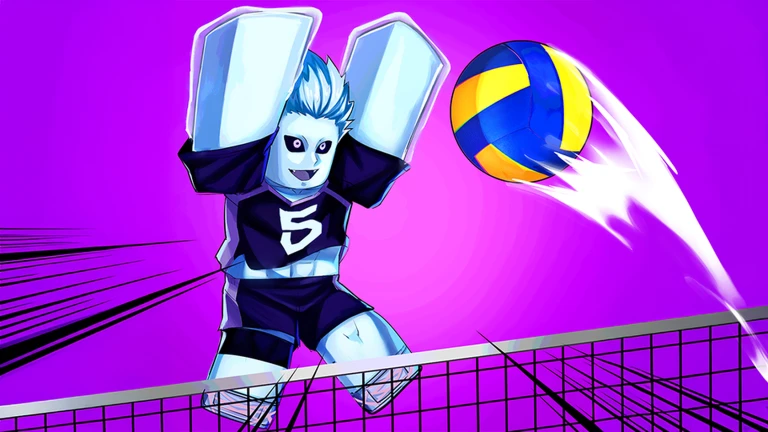
Slam gives a dedicated block answer while Boost turns the next attack into the payoff, so Shiro contributes on both sides of the net without pretending to be a receiver.
- Best for
- Players who read the hitter, close the block, and can switch modes before contact.
- Watch for
- Bump is the obvious hole. A back-row Shiro still needs positioning and a teammate who can receive cleanly.
A top attack target when the rest of the team can deliver playable sets. Its ceiling comes from converting those chances, not from repairing a broken first touch.
- Best for
- Aggressive 2v2 and ranked players who already aim and time spikes consistently.
- Watch for
- Low block value makes it a poor answer when the team is losing at the net.
Top-end serve, spike, jump, and tilt give Jinko two ways to create direct pressure instead of waiting for one perfect set.
- Best for
- Players who want to threaten from the service line and finish rallies at the net.
- Watch for
- The stats do not replace receive discipline when the opponent serves at you.
The safest specialist for a player who wants to control tempo and give hitters repeatable balls rather than chase personal spike numbers.
- Best for
- Coordinated teams with a reliable attacker waiting for the second touch.
- Watch for
- Its value drops when nobody commits to hitting the set.
Extreme defensive coverage and strong bump, set, and speed numbers make Kisuki the cleanest answer for a team that cannot start an attack.
- Best for
- Back-row players who would rather save three rallies than force one low-percentage spike.
- Watch for
- You are choosing possession and recovery over a dedicated scoring kit.
Excellent specialists and hybrids
Strong keeps when their mechanic matches your role, even if they are not the universal answer.
Jump, spike, and tilt support a real attacking threat while the hybrid profile can still contest the net.
- Best for
- Players who want offense without surrendering every defensive rotation.
- Watch for
- Rainbow Tilt rewards practice; rarity alone will not aim it for you.
A dedicated playmaker with the jump, set, and speed to run an organized attack.
- Best for
- Teams that call their hitter and expect a setter to stay on the second touch.
- Watch for
- Less rewarding in solo games where teammates repeatedly take the set away.
Maximum block and jump make Mikage a dependable net specialist without the mode management Shiro asks for.
- Best for
- Players who want a direct, readable blocking job.
- Watch for
- A narrow defensive role can feel quiet when opponents avoid your lane.
High bump, jump, and spike let Kazana cover a missing role during messy public matches.
- Best for
- Solo queue and teams whose rotations change from rally to rally.
- Watch for
- A flexible kit still loses to a specialist when one job decides every point.
Strong bump, set, and movement reward court reading and keep Akari useful before the rally settles into a fixed role.
- Best for
- Position-first players who win through coverage and timing.
- Watch for
- Requires better decisions than a simple “press the attack button” style.
Good, realistic keeps
Useful choices that can carry their job while you save Lucky Spins for a meaningful upgrade.
Maximum jump and spike make Bakuri a straightforward attacker without the rarity cost of a top limited style.
- Best for
- Learning approach timing and turning clean sets into points.
- Watch for
- Limited defense and team utility make bad receives more visible.
A strong block stat and usable attack profile make it a practical net option.
- Best for
- Players who want to learn blocking before chasing Shiro or Mikage.
- Watch for
- Slow court movement punishes late positioning.
A clean 100 set stat makes base Kyamo a sensible role pick instead of automatic reroll material.
- Best for
- New setters who need repeatable ball control more than a flashy mechanic.
- Watch for
- Timeskip Kyamo has the stronger full package when it is actually obtainable.
Serve, jump, block, and set give Okazu a useful rotation without demanding a Secret pull.
- Best for
- Players who want pressure on serve and a credible second touch.
- Watch for
- It is broad value, not the highest ceiling in either specialist role.
Speed, bump, and dive make Yokai a good defensive bridge while you build a better libero slot.
- Best for
- Players learning spacing and first-touch recovery.
- Watch for
- It does not add the same attacking threat as a hybrid Secret style.
Playable learning styles
Keep temporarily when the style teaches your intended role; replace when a clear role upgrade arrives.
A readable entry point for practicing net attacks and tilt without a complex mode.
- Best for
- Casual matches and players still learning approach timing.
Balanced enough to reveal which role you enjoy, but not specialized enough to solve a hard ranked matchup.
- Best for
- Early accounts choosing between setting, receiving, and attacking.
A defensively tilted Legendary that remains useful until a faster, higher-coverage receiver arrives.
- Best for
- Learning bump and dive spacing.
Replace after learning the controls
Common and Rare starter profiles with little reason to consume premium spins trying to preserve them.
Useful for learning the block button, but the jump and movement ceiling arrives quickly.
- Best for
- The first few matches only.
Basic defensive stats fill a slot but do not create a lasting build.
- Best for
- New accounts before a role-specific pull.
A temporary attacker that should not consume scarce Lucky Spins or mastery time.
- Best for
- Learning spike contact before the first meaningful upgrade.
Style × Ability decisions by rally problem
Pick the repeated problem first. An ability that fixes that touch is worth more than a fashionable pairing built for somebody else’s position.
| Problem you need to solve | Style routes | Ability routes | Why the pairing fits |
|---|---|---|---|
| A blocker keeps stopping your clean sets | Ronin, Jinko, Sanu, or Hidari | Shield Breaker; Divine Strength if raw conversion is the issue | The style supplies a real attack lane while the ability helps the final touch beat pressure. |
| You arrive late or lose the vertical contest | Shiro, Mikage, or Hirakumi | Lead Feet, Boom Jump, or Steel Block | Shiro’s current guide specifically favors Lead Feet or Boom Jump; the broader rule is to fix timing or height, not add another unrelated gimmick. |
| Your hitter waits under slow, obvious sets | Timeskip Kyamo, Taichou, or Feiko | Minus Tempo or Moonball | Setter tools change the attack timing so the blocker cannot camp one predictable arc. |
| The first touch dies before a set is possible | Kisuki, Kumo, Kimiro, or Yokai | Extra Touch or Magnetic Pull | Both routes buy another playable contact instead of pretending more spike power will repair a missed receive. |
| Solo queue keeps changing your job | Akari, Kazana, Encho, or The Twins | Magnetic Pull or Lead Feet | A flexible style plus a multi-use recovery or movement tool covers the widest set of broken rotations. |
Keep, practice, or reroll?
Use this before turning free code spins into a long reroll session.
| Your situation | Decision | Reason |
|---|---|---|
| You own an S/A style for the role you actually play | Keep and practice it | A lateral reroll can erase a useful specialist without fixing any rally weakness. |
| You own a B style that consistently performs its job | Keep while saving Lucky Spins | The next upgrade should be a clear role upgrade, not merely a rarer badge. |
| You keep losing the same touch despite good positioning | Review the Ability slot first | The style may be fine while the ability solves the wrong problem. |
| A new limited style just released | Check the live menu before rolling | Availability, preferred-target settings, and pity information can change with the weekly update. |
Shiro is a blocker first, not an all-court miracle
Update 85 introduced Shiro with 100 block, jump, and set in the current published breakdown, plus Slam and Boost modes. Slam is the defensive answer; Boost prepares the next attack. That is a strong two-touch identity, but its low bump means the team still needs a receiver.
Use Shiro when you enjoy reading the hitter and can decide which mode matters before the contact. If you spend most rallies in the back row, Kisuki or Kumo solves your real job more directly.
The best spiker still needs a playable second touch
Ronin, Jinko, Sanu, and Hidari all earn attention for attack pressure, but none turns a shanked receive into a clean set. In a coordinated team, that specialization is a strength. In solo queue, an all-rounder can create more actual scoring chances because it keeps the rally alive first.
Judge a spiker across ten normal sets, not a single highlight. Count clean contacts, useful angles, and how often you are blocked. If the ball rarely reaches you, rerolling the spiker slot is not the first fix.
Setters and receivers should be ranked on what happens next
Timeskip Kyamo and Taichou are valuable because they make the hitter’s next touch easier. Kisuki and Kumo do the same one step earlier by making the first touch playable. Their personal point totals can look modest while the team wins more rallies.
A useful test is simple: after your touch, does a teammate have a controlled option? If yes, the style is doing its job. A global damage-first tier list will understate that value every time.
Spend spins on a problem, not on a color
Lucky Style and Lucky Ability Spins are separate resources. Before using either, write down the repeated failure: blocked finisher, late jump, bad first touch, slow set, or missing court coverage. Then change the slot that can affect that failure.
The current code page separates Style and Ability rewards, so it is the quickest place to see which pool the weekly batch actually funds. A working B-tier role fit is safer than two simultaneous rerolls with no plan.
What this tier list does not claim
These are editorial role tiers, not developer rankings or measured global win rates. Match size, teammates, ping, mastery, and the opponent’s habits can all reverse a close placement. Shiro is new enough that its position should be treated as an Update 85 snapshot rather than a permanent verdict.
The official Roblox page promises weekly Saturday updates. Recheck the live menu after a balance patch, especially before spending on a limited or preferred style.
Methodology and limits
This September 2 board uses the live Update 85 experience, the August 30 Shiro breakdown, two recent style rankings, and a role-based ability reference. Tiers measure how reliably a style performs its named job, not rarity, trade value, or an imaginary win-rate database. Limited availability and balance changes can move a style without changing its basic role.
Sources and check dates
The date beside each link shows when it was last checked. Rankings and recommendations are our synthesis, not official grades from the developer.
- Volleyball Legends official Roblox experienceofficial · 2026-09-02
- Live Roblox experience record for Update 85official · 2026-09-02
- Current Shiro mechanics and stat checkcross-check · 2026-09-02
- Late-July competitive style rankingcross-check · 2026-09-02
- Role-based Ability use and pairing referencecross-check · 2026-09-02
Volleyball Legends tier list FAQ
What is the best Volleyball Legends style right now?
There is no honest one-name answer for every position. Shiro is the current blocker target, Ronin or Jinko fits dedicated spikers, Timeskip Kyamo leads the setter route, and Kisuki or Kumo is more useful when receiving is the team’s real weakness.
Is Shiro worth using Lucky Style Spins for?
Yes if you actively play at the net and want its Slam/Boost decision. A receiver or pure spiker should not chase it only because it is the newest Secret style; check the live availability and pity panel before rolling.
Which Ability works best with Shiro?
The current Shiro breakdown recommends Lead Feet or Boom Jump to reinforce its vertical contest. Steel Block is a direct defensive alternative, while Magnetic Pull is more about recovering awkward balls than maximizing the block.
Should I reroll a Godly style for a Secret style?
Only when the Secret is a clear upgrade for your role. Bakuri, Hirakumi, Kyamo, and Okazu can all perform a defined job, so replacing one with a mismatched Secret can make the team worse despite the rarity jump.
Does this list also cover VBL and Haikyuu Legends?
Yes. VBL is the common abbreviation, and Haikyuu Legends was the former name of the same Roblox experience. All three searches refer to the current Volleyball Legends build.